The European Commission has proposed a Council Recommendation on cardiovascular health checks, opening the door for adolescents and young adults who survived cancer, and who face heart risks linked to their treatment.
On 28 September 2026, the European Commission published its proposal for a Council Recommendation on cardiovascular health checks: an EU approach to early detection and screening (COM(2026) 481). It is the flagship early-detection initiative of the EU's Safe Hearts Plan, which aims to cut premature cardiovascular deaths by 25% by 2035.
Cardiovascular diseases remain the leading cause of death and disability in the EU, claiming 1.7 million lives every year, affectting around 62 million people and costing more than EUR 282 billion annually. Yet fewer than half of EU Member States currently offer structured cardiovascular health checks.
The proposal invites Member States to design and implement accessible, evidence-based cardiovascular health checks, linked to follow-up care through an integrated, patient-centred pathway. It sets concrete targets for 2035:
The proposal also recommends targeting people at higher risk, integrating sex- and gender-specific considerations, reaching vulnerable groups through primary care, pharmacies and mobile units, and using clinically validated AI-based tools under appropriate human oversight. Member States would report on implementation within three years of adoption.
Some cancer treatments, such as certain chemotherapies, targeted therapies and chest radiotherapy, can damage the heart and blood vessels. These cardiotoxic effects may appear years or even decades after treatment ends. For survivors diagnosed as adolescents or young adults, this means an elevated cardiovascular risk, often starting before the age groups targeted by routine checks.
The proposal does not name cancer survivors or cardiotoxicity explicitly. Its only reference to cancer is a link to Europe's Beating Cancer Plan and its screening objectives. However, several provisions give Member States clear room to include survivors:
As Member States translate the Recommendation into national programmes, the cardio-oncology and cancer survivorship communities have a chance to make sure that a history of cardiotoxic treatment is recognised as a risk factor in its own right.
MAYA develops AI-driven digital tools to help Adolescents and Young Adults cancer survivors manage the cardiovascular late effects of their treatment. Its iCARE health hub, a smart mirror with an AI-powered conversational agent, helps survivors understand their own health data and take an active role in long-term care.
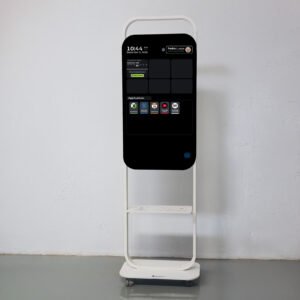
The MAYA project smart mirror.
The proposal echoes several of MAYA's priorities:
MAYA will follow the Council's discussions closely and share evidence from its work with AYA survivors to help ensure that young people living with the cardiac legacy of cancer are not left out of Europe's new approach to heart health.