
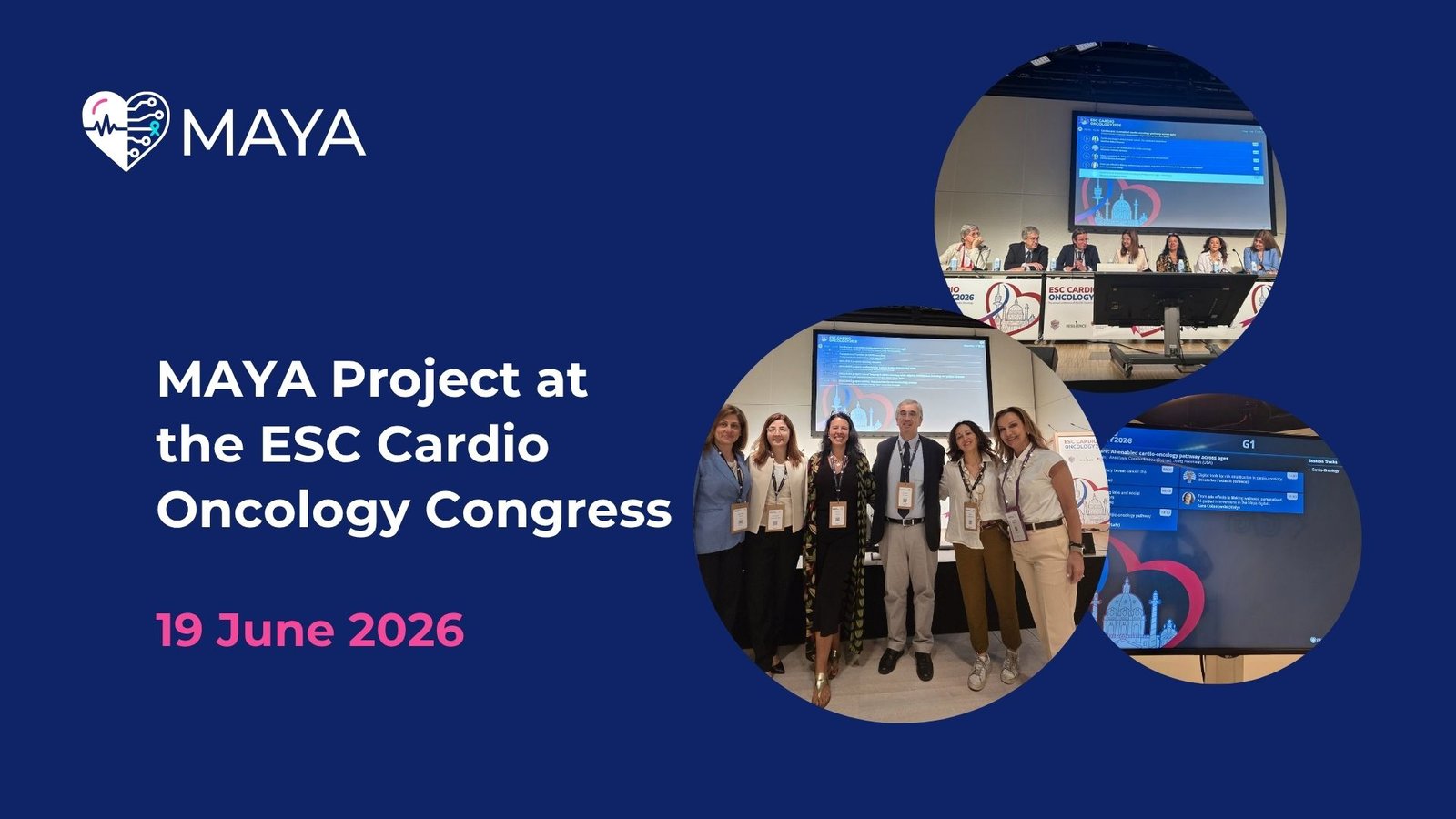
© Photos by Carina Dantas
On 19 June 2026, MAYA partners participated in the European Society of Cardiology (ESC) Cardio-Oncology 2026 Congress in Vienna, marking an important milestone in the project's growing visibility within the international cardio-oncology community.
SHINE 2Europe, one of MAYA's partners, presented the project in a dedicated session titled "MAYA in Practice: AI, Living Labs and Social Innovation for AYA Survivors", organised by Prof. Dimitris Fotiadis, coordinator of the MAYA Project, alongside partners Sara Colantonio, Katerina Naka, Riccardo Asteggiano, and Anastasia Constantinidou. The session also featured outcomes from the CardiOCare project, including relevant datasets, innovative AI tools, and examples of patient partnership in developing and validating them.
The presentation highlighted MAYA's distinctive approach to supporting Adolescents and Young Adults (AYA) living beyond cancer — a population facing long-term physical, emotional, social, and cardiovascular challenges that extend well beyond the end of treatment. As cancer survival rates continue to improve across Europe, addressing these post-treatment needs becomes ever more critical.
At the heart of the MAYA approach is the combination of three interconnected pillars: Artificial Intelligence to deliver personalised support and insights; Living Labs that actively engage survivors, caregivers, clinicians, and communities in co-creation; and Social Innovation methods that place patients as partners through co-research, ensuring solutions are meaningful, inclusive, and sustainable in real-world settings.
Central to this is MAYA's commitment to designing with people with lived experience, not for them — a principle that underpins the project's iCARE health hub, which uses a smart mirror and an AI-powered conversational agent to help AYA survivors monitor and manage their cardiovascular health from home.
The session sparked inspiring discussions on the growing recognition of survivorship care and digital innovation within cardio-oncology, and underscored the importance of collaborative European initiatives such as MAYA in shaping the future of personalised, preventive, and truly patient-centred care.